
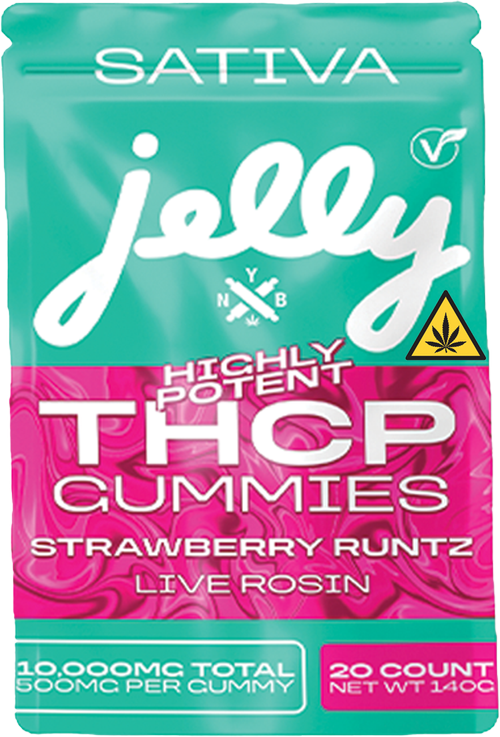
Jelly THCP Live Rosin
$33.99
Jelly THCP Live Rosin Gummies are ultra-potent edibles infused with premium live rosin and THCP, delivering 500 mg per gummy for a total of 10,000 mg per 20-count bag. Crafted for experienced users, these gummies offer a powerful, long-lasting effect with the added benefits of live rosin’s full-spectrum cannabinoids and rich terpene profile. Ideal for those seeking a next-level experience, these gummies should be used with caution due to their high potency.
3 Flavors Available:
Blueberry Drip
Strawberry Runtz
Watermelon Haze
Introduction to Jelly Edibles
Jelly edibles are soft, chewable products crafted with a gummy-like texture and designed for adult markets where infused consumables are regulated. Their candy–like appearance, bright colors, and consistent texture have made them a recognizable product category within the broader edible industry. Because they resemble regular treats, packaging and labeling standards are critical.
What THCP Represents
THCP is a compound found in very small amounts in certain plant materials and has been studied for its potentially high potency compared to other related cannabinoids. In adult markets, products labeled with THCP are typically formulated for experienced adult consumers. Regulations require clear labeling, warnings, and precise potency information due to its intensity.
Understanding Live Rosin Infusion
Live rosin is a type of concentrate created without solvents and produced from freshly frozen plant material. This method is valued in adult-use industries because it preserves natural terpenes and aromatic compounds. When incorporated into jelly edibles, live rosin contributes to both flavor and aroma profiles, making it a premium infusion choice.
The Appeal of Jelly THCP Live Rosin Blends
Products featuring THCP combined with live rosin are often marketed as high-end or specialty items. The combination offers a blend of potency and rich botanical flavors. Brands highlight these qualities to differentiate them from standard gummies while maintaining regulatory compliance and safety messaging.
Flavor Profiles and Sensory Elements
Jelly edibles infused with live rosin often retain subtle, natural flavor notes from the rosin while still incorporating fruit-forward or dessert-style flavors. This balance allows manufacturers to appeal to adult consumers who appreciate both traditional candy-tasting edibles and more terpene-forward profiles. The soft chew and smooth texture add to their overall sensory experience.
How Jelly THCP Live Rosin Edibles Are Made
Manufacturing typically starts with heating and blending the base ingredients—such as sugar, pectin or gelatin, and flavorings—before incorporating the live rosin and THCP. The mixture is poured into molds, cooled, and allowed to set. Afterward, each batch undergoes quality checks to ensure uniformity, compliant potency levels, and proper texture.
Packaging and Regulatory Requirements
Because these products contain both THCP and live rosin, regulations require clear potency labeling, child-resistant packaging, serving-size guidance, and safety warnings. Many companies also include QR codes linking to lab results, which detail purity, potency, and testing for contaminants. This transparency supports responsible consumption among legal-age adults.
Intended Audience and Legal Considerations
Jelly THCP Live Rosin edibles are formulated strictly for adults in regions where such products are legally sold. Laws typically mandate age verification, product testing, and specific packaging rules. These measures exist to reduce access by minors and ensure that only informed adults can purchase such items.
Quality Control and Third-Party Testing
Reputable brands conduct third-party lab tests on every batch to confirm consistency and safety. Testing often checks for microbial contaminants, heavy metals, pesticide residues, and accurate THCP concentration. This ensures consumers receive a product that matches its labeling—a crucial part of regulated edible markets.
Importance of Consumer Education
Understanding terms like THCP, live rosin, and jelly edibles helps people differentiate between product types and recognize why strict regulations exist. Informational content empowers readers to interpret labels, understand potency, and appreciate the role of safety standards, all of which contribute to responsible use within adult markets.
Be the first to review “Jelly THCP Live Rosin”
Related products
Edibles
Edibles
Edibles
Edibles
Vapes & Concentrates
Vapes & Concentrates

Vapes & Concentrates
Reviews
There are no reviews yet.